Satyamev Jayate Season 2: Give a missed call to 1800-103-2301 to join Satyamev Jayate’s fight for a standard protocol for medical examination of survivors of rape #FightingRape
Sunday, March 2, 2014


Saturday, March 1, 2014
Arvind Saxena quits VW; joins GM India
Clearing the speculation, General Motors today announced the appointment of Arvind Saxena as the new President & Managing Director of GM India with effect from 1 March 2014.
Congress has Foot-in-Mouth Disease
Midas had a unique gift : everything he touched
turned to gold..We all know how the story ends..
But during the election campaign of 2014,
everything Congress has said till date has backfired. Recently Union Home
Minister Sushil Kumar Shinde shocked the media saying that he will crush
the elements (media) that are spreading false propaganda. He later
clarified that he meant the social media. Don't know if he meant Facebook and
Twitter, where anyone and everyone who has an opinion, is voicing it. At a time
when even CPM is embracing social media, Congress seems to be against it,
undermining its power and reach.
CPM on 25th February 2014 stared a twitter page
#cpimspeak and since has 1273 followers and 35 tweets. It certainly cannot be
compared to #INCIndia page which has 134K followers and 1807 tweets.
What Union Home Minister failed to understand is
that Social Media is just not Facebook and Twitter and #Congress would have to
shut down the entire internet if it thinks people are spreading false
propaganda against it. Recently Congress's Kattar Soch Nahi, Yuva Josh ad
with Hasiba B Amin backfired as allegations that she was involved in
a 300 crores scam did not go well in the social media. Disgusted with what she
claims to be false rumors and under family pressure, she finally tweeted "Disgusted with the campaign against me. Not a bit
of it is true. Think of the girls in ur family before u falsely spoil the image
of a girl!"
With Congress claiming to spend 400 crores for
election campaign, we would expect a better social and print media strategy
after all “All the Likes and Clicks would matter in an election that has no
clear verdict for anyone”
Friday, February 28, 2014
MOOC Courses With IIT Material for Engineering Students, from the Government
NPTEL (National Programme on Technology Enhanced Learning) is a joint initiative of the IITs and IISc. Through this initiative, we offer online courses and certification in Programming, Data structures & Algorithms. Please see the video on the right for a brief message from all the contributors to this effort.
Join and get JOB READY!
Online course: Free for all, Certification exam: For a nominal fee
Important dates
| Course sign-up: | 10 Feb 2014 |
| Last date for sign-up: | 10 Mar 2014 |
| Course begins on: | 3 Mar 2014 |
| Registration for certification exam: | 31 Mar 2014 |
| Dates for certification exam: | 31 May 2014 1, 7 & 8 June 2014 |
Please refer to FAQs for answers to common questions.
Programming, Data Structures and AlgorithmsSign Up
About the course
This is a course on programming, data structures and algorithms. The learner is assumed to have no prior experience of programming, but is expected to be at the level of a second year undergraduate college student in science or engineering. The course will run over ten weeks with about 2-3 hours of lectures per week.At the end of each week, the learner is expected to write some programs and submit them for grading. These programming problems are classified as easy, moderate or difficult. The easy problems, typically, are repeats from the lecture. The moderate and difficult ones will require increasing levels of initiative from the learner.
In addition, at the end of each week the learner is expected to answer a set of objective-type assessment questions.Course highlights
- Duration: 10 weeks
- 2-3 hours of lecture per week
- Aimed at college students 2nd year & above
- Online assessment & programming assignments
- In-person proctored examination with certification
New Flat is available for rent TC palaya road , Ramamurthy Nagar
Flat is available for rent at TC palaya road , Ramamurthy Nagar, interested can contact at 9880148022.


Wednesday, February 26, 2014
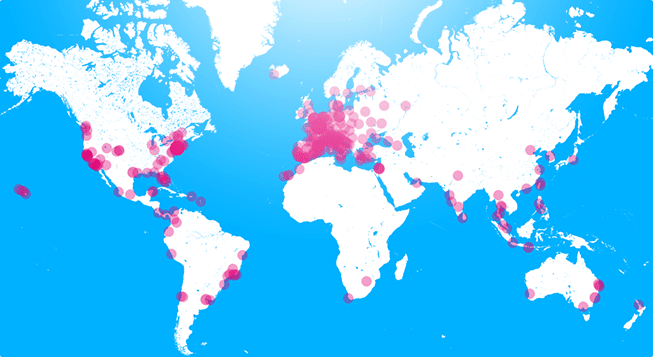
Airbnb: A community marketplace for people to list, discover, and book unique accommodations around the world
Founded in August of 2008 and based in San Francisco, California, Airbnb is a trusted community marketplace for people to list, discover, and book unique accommodations around the world — online or from a mobile phone.
Whether an apartment for a night, a castle for a week, or a villa for a month, Airbnb connects people to unique travel experiences, at any price point, in more than 33,000 cities and 192 countries. And with world-class customer service and a growing community of users, Airbnb is the easiest way for people to monetize their extra space and showcase it to an audience of millions.
TOTAL GUESTS
11,000,000+
CITIES
34,000+
CASTLES
600+
COUNTRIES
192



Saturday, February 22, 2014
Highway review
Released worldwide on 21 February 2014, the film was screened in the Panorama section of the 2014 Berlin International Film Festival. The film outlines the story of a young woman who is kidnapped right before her wedding and held for ransom wherein she begins to develop a strange bond with her kidnapper.
Initial release: February 21, 2014 (USA)
Running time: 133 minutes
| Directed by | Imtiaz Ali |
|---|---|
| Produced by | Sajid Nadiadwala Imtiaz Ali |
| Written by | Imtiaz Ali |
| Starring | |
| Music by | A. R. Rahman |
| Cinematography | Anil Mehta |
| Studio | Window Seat Films Nadiadwala Grandson Entertainment |
| Distributed by | UTV Motion Pictures |
Cast
- Randeep Hooda as Mahabir Bhati
- Alia Bhatt as Veera Tripathi
- Saharsh Kumar Shukla as Goru
- Pradeep Nagar as Tonk
- Durgesh Kumar as Aadoo
- Arjun Malhotra as Vinay
Thursday, February 20, 2014
Budget 2014-2015: Highlights
Key Features of Budget
2014-2015
THE CURRENT ECONOMIC
SITUATION AND THE CHALLENGES
The state of world
economy has been the most decisive factor affecting the fortunes of every
developing country. ‰The world economy has been witnessing a sliding trend in
growth, from 3.9 percent in 2011 to 3.1 percent in 2012 and 3 percent in 2013.
‰
The economic situation
of major trading partners of India, who are also the major source of our
foreign capital inflows, continues to be under stress. United States has just
recovered from long recession, Euro zone, as a whole, is reporting a growth of
0.2 per cent, and China’s growth has also slowed down.
The economic challenges
faced by our country are common to all emerging economies. Despite these
challenges, we have successfully navigated through this period of crisis. Apart
from embarking on the path of fiscal consolidation, the objectives of price
stability, self sufficiency in food, reviving the growth cycle, enhancing
investments, promoting manufacturing, encouraging exports, quickening the phase
of implementation of projects and reducing a stress on important sectors were
the goals set in 2012-13.
STATE OF ECONOMY
Deficit and Inflation
- ‰ The fiscal deficit for 2013-14 contained at 4.6
percent .
- ‰ The currect account deficit projected to be at USD 45
billion in 2013-14 down from USD 88 billion in 2012-13.
- ‰ Foreign exchange reserve to grow by USD 15 billion in
this Financial Year
- ‰ No more talk of down grade of Indian Economy by
Rating Agencies.
- ‰ Fiscal stability at the top of the Agenda.
- ‰ Government and RBI have acted in tandem to bring down
inflation.
- ‰ WPI inflation down to 5.05 percent and core inflation
down to 3.0 percent in January 2014.
- ‰ Food inflation down to 6.2 percent from a high of
13.8 per cent.
Agriculture
- Agricultural sector has performed remarkably well.
- Food grain production estimated for the current year is
263 million tonnes compared to 255.36 million tonnes in 2012-13.
- Agriculture export likely to cross USD 45 billion
higher from USD 41 billion in 2012-13.
- Agricultural credit to exceed the target of ` 7 lakh
crores.
- Agricultural GDP growth for the current year estimated
at 4.6 percent compared to 4.0 percent in the last four years.
Investment
- Savings rate at 30.1 percent and investment rate of
34.8 percent in 2012-13.
- Government set up a Cabinet Committee on investment
and the Project Monitoring Group to boost investment. By end of January
2014, Projects numbering 296 with an estimated project cost of ` 660,000
crore cleared.
Foreign Trade
- Despite a decline in growth of global trade, our export
have recovered sharply.
- The estimated merchandise export is estimated to reach
USD 326 billion indicating a growth rate of 6.3 percent in comparison to
the previous year.
Manufacturing
- The sluggish import is a matter of concern for
manufacturing and domestic trade sector.
- Due to deceleration in investment, the manufacturing
sector has witnessed a sluggish growth.
- The National Manufacturing Policy has set the goal of
increasing the share of manufacturing in GDP to 25 percent and to create
100 million jobs over a decade.
- 8 National Investment and Manufacturing Zones (NIMZ)
along Delhi Mumbai Industrial Corridor (DMIC) have been announced. 9
Projects had been approved by the DMIC trust.
- 3 more Industrial Corridors connecting Chennai and
Bengaluru, Bengaluru and Mumbai & Amritsar and Kolkata are under
different stages of preparatory works.
- Additional capacities are being installed in major
manufacturing industries.
- Notification of a public procurement policy,
establishing technology and common facility centres, and launching the
Khadi Mark are steps taken to promote Micro Small and Medium Enterprises.
Infrastructure
- In 2012-13 and in nine months of the current financial
year, 29, 350 MW of power capacity, 3, 928 Kms of National Highways, 39,
144 Kms of Rural Roads, 3,343 Kms of New Railway track and 217.5 milliion
tonnes of capacity per annum in our ports have been created to give a big
boost to infrastructure industries.
- 19 Oil and Gas blocks were given out for exploration
and 7 new Air ports are under construction.
- Infrastructure debt funds have been promoted to provide
finances for infrastructure Projects.
Exchange Rates
- Rupee came under pressure following indications by US
Federal Reserve of reduction in asset purchases in May 2013.
- Government, RBI and SEBI undertook a number of measures
to facilitate capital inflows and stablize the foreign exchange
markets. As a result among emerging economy currencies rupee was least
affected when actual reduction took place in December 2013.
GDP Growth
- The GDP slow-down which began in 2011-12 reaching 4.4
percent in Q1 of 2013-14 from 7.5 percent in the corresponding period in
2011-12 has been controlled by numerous measures taken by the Government.
Growth in the third and fourth quarter of the current year is expected to
be 5.2 percent and that for the whole year has been estimated at 4.9
percent.
- The declining fiscal deficit, stable Exchange Rate and
reducing Current Account Deficit moderation in inflation, increasing
exports are reflection of a more stable economy today.
UPA’s record of Growth
- In India growth is an imperative but sustainable and
inclusive growth model must address the concerns of environment, inter
generational equity, indebtedness etc.
- Un paralleled record of growth in 10 years of UPA
Government.
- Production of food grains up from 213 million tonnes to
263 million tonnes, installed power capacity up to 2,34,600 MW from
1,12,700 MW, coal production 554 million tonnes from 361 million tonnes,
3,89,578 Kms of Rural Roads under PMGSY from 51,511 Kms, over a period of
10 years.
- The expenditure on Health & Family Welfare has
reached ` 36,322 crore from` 7,248 ten years ago.
- The expenditure on Education has reached ` 79,451 crore
from ` 10,145 ten years ago. UPA-I & UPA-II Governments have delivered
above the trend growth of 6.2 percent, which prevailed over a period of 33
years.
Report Card of 2013-14
- De-controlling sugar, gradual correction of diesel
prices, rationalization of railway fares, were some of the courageous and
long over due decisions taken by the Government.
- Applications were invited for issue of new bank
licences.
- DISCOMS, mostly
sick are being restructured with generous central assistance.
- 12.8 lakhs land titles covering 18.80 lakh hectare were distributed under the Scheduled Tribes and Other traditional Forest Dwellers Act.
- The oppressive colonial law of 1894 was substituted with the Right to Fair Compensation and Transparency in Land Acquisition Rehabilitation and Resettlement Act.
- National Food Security Act was passed assuring food to 67 percent of the population/households.
- The new
companies Act replaced a law of 1956 vintage.
- The PFRDA Act was passed to establish a statutory regulator for the New Pension Scheme.
Economic Initiative
- Centrally
Sponsered Schemes were restructured into 66 Programs for greater Synergy.
- Funds under these programs will be released as Central assistance to State Plan, thus giving greater authority and responsibility. As a result, Central assistance to plans of States & UTs will rise substantially from `136,254 crore in BE 2013-14 to`338,562 crore in 2014-15.
- Record Capital expenditure of ` 257,641 crores in 2013-14 by public sector enterprises.
- About 50,000 MW of Thermal and Hydel Power capacity is under construction after receiving all clearances and approvals. 78,000 MW of power capacity have been assured coal supply.
- Liberalised FDI policy in tele-communication, pharmaceuticals, civil aviation, power trading exchange, and multi brand retail to attract large investment.
- Approval to
establish 2 semi conductor wafer fab units.
- Approval of IT
modernization project of Department of Post.
- Kudankulam Nuclear Power Plant Unit-I achieved criticality and is generating 180 Milliion Units of power.
- Fast breeder
Reactor at Kalpakkam and 7 Nuclear Power Reactors under construction.
- National Solar Mission to add 4 Ultra Mega Solar Power Projects each with the capacity of over 500 MW in 2014-15.
- Ministry of MSME will create the ‘India Inclusive Innovation Fund’ to promote grass root innovations with social returns to support enterprises in the MSME sector with an initial contribution of `100 crore to the corpus of the fund.
Social Sector Initiative
- A Venture Capital Fund to provide concessional finance to Scheduled Caste will be set up by IFCI with an initial capital of ` 200 crore which can be supplemented every year.
- The restructured ICDS, under implementation in 400 districts, will be rolled out in remaining districts from 1.4.2014.
- A National
Agro-Forestry Policy 2014 has been approved.
- A mechanism for marketing minor Forest produce has been introduced and an allocation of ` 444.59 crore has been made to continue the Scheme in 2014-15.
- A new Plan Scheme with an allocation of `100 crore has been approved to promote community radio station
- New technologies such as JE vaccine, a diagnostic test for Thalassaemia and Magnivisualizer for detection of Cervical cancer have been delivered to people.
- Additional Central Assistance to some States
- A sum of `1200 crore as additional central assistance to North Eastern states, Himachal Pradesh and Uttarakhand in this financial year.
Space
- India joined a
handful of countries when it launched the Mars Orbiter Mission.
- The Country has acquired capability in launch vehicle technology, cryogenics and navigation , meteorological and communication satellites.
- Several flight
tests, navigational satellites and space missions are planned for 2014-15
Redeeming promises
- A Corpus has been created for ‘Nirbhaya Fund’ with a non lapsable grant of `1000 crore. 2 Proposals to ensure the dignity and safety of women have been approved which will be funded from the Nirbhaya Fund . A sum of ` 1000 crore has again been provided in FY 2014-15
- The National Skill Certification and monitary reward schemes launched in August 2013 with an allocation of ` 1000 crore has been widely hailed as a success. A sum of ` 1000 crore is proposed to be transferred to the NSD Trust to scale up its programme rapidly.
- Government remains fully committed to Aadhar under which 57 crore Unique Numbers have been issued so far and to opening bank accounts for all Aadhar holders to promote financial inclusion.
- Through the Direct Benefic Transfer (DBT) Scheme, a total of ` 628 crore (54,20,114 transactions) has been transferred directly to the beneficiaries till 31st January 2014 under 27 Schemes.
OVERVIEW OF THE INTERIM
BUDGET
- In order to sustain the pace of plan expenditure, it has been kept at the same level in 2014-15 at which, it was budgeted in 2013-14.
- Ministries/Departments which run key flagship programmes have been provided adequate funds in 2014-15 either equal to or higher than in the BE 2013-14. These include Ministries namely, Minority Affairs, Tribal Affairs, Housing & Poverty Alleviation, Social Justice & Empowerment, Panchayat Raj, Driniking Water and Sanitation, Women & Child Development, Health & Family Welfare, Human Resource Development and Rural Development.
Railways
- Budgetary support to Railways has been increased from ` 26,000 crore in BE 2013-14 to ` 29,000 crore in 2014-15.
- It is proposed to indentify new instruments and new mechanisms to raise funds for Railway Projects.
- SC Sub-Plan and Tribal Sub-Plan, Gender Budget and Child Budget ` 48,638 crore and ` 30,726 crore are allocated to the SC Sub-Plan and Tribal Sub-Plan respectively.
- Gender Budget and Child Budget has ` 97,533 crore and ` 81,024 crore respectively.
Non Plan Expenditure
- Non Plan expenditure is estimated at ` 12,07,892 crore.
- The expenditure on subsidies for food, fertilizer & fuel will be ` 246,472 crore slightlyhigher than the revised estimates of ` 245,453 crore in 2013-14.
- ` 115,000 crore has been allocated for food subsidies taking in to account, Government‘s firm and irrevocable committment to implement the National FoodSecurity Act throughout the country.
- 10 per cent hike in Defence allocation has been given in comparison to BE 2013-14.
- Government has accepted the principle of one rank one pension for the Defence Forces which will be implemented prospectively from the FY 2014-15. A sum of ` 500 crore is proposed to be transferred to the Defence Pension Account in the current Financial Year itself.
Central Armed Police
Forces
- A modernization Plan at a cost of `11,009 crore has been approved to strengthen the capacity of Central Armed Police Forces and to provide them the state-of-art, equipment and technology.
FINANCIAL SECTOR
- All the announcements concerning the Financial sector made in the Budget Speech of February 2013 have been implemented.
- ` 11,300 crore is proposed to be provided for Capital infusion in Public Sector Banks.
- 5,207 new branches have been opened against the target of 8,023.
- Bhartia Mahila Bank has been established.
- ` 6,000 crore and ` 2,000 crore have been provided to Rural and Urban Housing Funds respectively.
- The target of ` 700,000 crore of Agricultural Credit is likely to be exceeded by the Banks. The target for 2014-15 is ` 800,000 Crore.
- ` 23,924 crore has been released under the Interest Subvention Scheme on farm loans, with effective rate of interest on farm loans at 4 percent including subvention of 2 percent and incentive of 3 percent for prompt payment.
Credit to Minority
Communities
- The number of bank accounts of minorities has increased to 43,52,000 at the end of March 2013 from 14,15,000 ten years ago. The volume of lending has soared to ` 66,500 crore from ` 4,000 crore in the same period.
- Loans to minorities stood at ` 211,451 crore at the end of Decemeber 2013.
- Ten years ago, only 9,71,182 women Self-Help Groups (SHGs) had ben credit linked to banks. At the end of December 2013, 4,11,6000 women SHGs had been provided credit and the outstanding amount of credit was ` 36,893 crore
Education Loans
- A moratorium period is proposed for all education loans taken up to 31.3.2009 and outstanding on 31.12.2013. Government will take over the liability for outstanding interest as on 31.12.2013 but the borrower would have to pay interest for the period after 1.1.2014. An amount of ` 2,600 crore has been provided this year and it will benefit nearly 9 lakh student borrowers.
Insurance
- LIC and the four public sector general insurance companies have opened around 3000 offices in towns with a population of 10,000 or more to serve peri-urban and rural areas.
Financial Markets
Steps envisaged to deepen the Indian Financial
Market :
- ADR/GDR Scheme revamp, an enlargement of the scope of depository receipt
- Liberalization of rupee denominated corporate bond market.
- Currency Derivatives Market to be deepened and strengthened to enable Indian
- Companies to fully hedge against foriegn currency risk
- To create one record for all financial assets of every individual
- To enable smoother clearing and settlement for international investors looking to invest in Indian bonds.
Commodity Derivatives
Markets
- Swift action taken to sequester National Spot Exchange Limited (NSEL) after the payment crisis in the NSEL, this prevented spill over of the crisis to the other regulated segment of the financial markets.
- Proposal to amend the Forward Contracts (Regulation) Act.
Key Pending Bills
- The Insurance Laws (Amendment) Bill and the Securities Laws (Amendment) Bill have not been passed by Parliament for reasons that have nothing to do with the merits of the Bills.
Public Debt Management
Agency
- Public Debt Management Agency Bill is ready with the Government. It is proposed to establish a non statutory PDMA that can begin work in 2014-15.
VISION FOR FUTURE
India poised to be third largest economy along
with US and China, to play a leading an
important role in global
economy.
10 Tasks as part of the road map ahead include
:
- Fiscal consolidation : We must achieve the target of fiscal deficit of 3 percent of GDP by 2016-17 and remain below that level always.
- Current Account Deficit : CAD will be inevitable for some more years which can be financed only by foreign investment. Hence, there is no room for any aversion to foreign investment.
- Price Stability and Growth : In a developing economy, a high growth target entails a moderate level of inflation. RBI must strike a balance between price stability and growth while formulating the monetary policy.
- Financial Sector reforms to be completed as laid down by Financial Sector Legislative Reforms Commission.
- Massive investment in infrastructure : to be mobilized through the Public Private Partnership.
- Manufacturing sector to be the base of India’s development : All taxes, Central and State that go into an exported product should be waived or rebated. There should be a minimum tariff protection to incentive wise domestic manufacturing.
- Subsidies, which are absolutely necessary should be chosen and targeted only to the absolutely deserving.
- Urbanisation to be managed to make cities governable and liveable.
- Skill development must be given priority at par with secondary and university education, sanitation and universal health care.
- States to partner in development so as to enable the Centre to focus on Defense, Railways, National Highways and Tele-communication.
REVENUES
GST and DTC
- Government appeals to all political parties to resolve to pass the GST Laws and the Direct Tax Code in 2014-15
Funding Scientific
Research
- It is proposed to set up a Research Funding Organisation that will fund Research Projects selected through a competitive process. Contribution to that organisation will be eligible for tax benefits. The required legislative changes can be introduced at the time of regular Budget.
Off-shore Accounts
- The Government has succeeded in obtaining information on illegal off-shore accounts held by indians in 67 cases and action is under way. Prosecution for wilful tax evasion have also been launched in 17 other cases. More enquiries have been initiated in to accounts reportedly held by Indian entities in no tax or low tax jurisdictions.
Changes in Tax Rates
Following changes in some indirect tax rates
are proposed:
- States to partner in development so as to enable the Centre to focus on Defense, Railways, National Highways and Tele-communication.
- The Excise Duty on all goods falling under Chapter 84 & 85 of the Schedule to the Central Excise Tariff Act is reduced from 12 percent to 10 percent for the period upto 30.06.2014. The rates can be reviewed at the time of regular Budget.
- To give relief to the Automobile Industry, which is registering unprecended negative growth, the excise duty is reduced for the period up to 30.06.2014 as follows:
- Small Cars, Motorcycle, Scooters - from 12 % to 8% and Commercial Vehicles
- SUVs - from 30% to 24%
- Large and Mid-segment Cars - from 27/24% to 24/20%
- It is also proposed to make appropriate reductions in the excise duties on chassis and trailors - The rates can be reviewed at the time of regular Budget
- To encourage domestic production of mobile handsets, the excise duties for all categories of mobile handsets is restructured. The rates will be 6% with CENVAT credit or 1 percent without CENVAT credit.
- To encourage domestic production of soaps and oleo chemicals, the custom duty structure on non-edible grade industrial oils and its fractions, fatty acids and fatty alcohols is rationalized at 7.5 percent.
- To encourage domestic production of specified road construction machinery, the exemption from CVD on similar imported machinery is withdrawn.
- A concessional custom duty 5 percent on capital goods imported by the Bank
- Note Paper Mill India Private Limited is provided to encourage domestic production of security paper for printing currency notes.
- The loading and un-loading, packing, storage and warehousing of rice is exempted from Service Tax.
- The services provided by cord blood banks is exempted from Service Tax.
BUDGET ESTIMATE
- The current financial year will end on a satisfactory note with the fiscal deficit at 4.6 percent (below the red line of 4.8 percent) and the revenue deficit at 3.3 percent.
- Fiscal Deficit in 2014-15 estimated to be 4.1 percent which will be below the target set by new Fiscal Consolidation Path and Revenue Deficit is estimated at 3.0 percent.
- The estimate of Plan Expenditure is `555,322 crore. Non Plan expenditure is estimated at `12,07,892 crore.
Wednesday, February 19, 2014
Social Media Optimization Solutions
Social Media Optimization
'Social media optimization' (SMO) refers
to the use of a number of social media outlets
and communities to generate publicity to increase the awareness of a product,
brand or event. Types of social media involved include RSS feeds, social news and bookmarking sites, as well
as social networking sites, such as Twitter,
and video and blogging sites. SMO
is similar to search engine optimization in that
the goal is to generate traffic and awareness for a website. In general, social
media optimization refers to optimizing a website and its content in terms of
sharing across social media and networking sites. -Wikipedia
Adobe Target
The most powerful solution for testing and targeting is
now easier to use than ever before. With the new Adobe Target, you get an
intuitive user interface, built-in best practices, and robust optimization
tools, so you can test quickly and often, target site visitors with confidence,
and create digital experiences that deliver real results. And real revenue.
Adobe Target capabilities

A/B testing
Easily set up and run concurrent tests to quickly determine the best offers, messaging, and sequences of content for your different visitor segments.

Multivariate testing
Use both partial and full factorial testing to understand the most impactful elements and best recipes for delivering real-time targeted content.

Rules-based targeting
Use prebuilt or custom rules to target content to specific audiences based on hundreds of variables, including location, historical behavior, and more.

Automated behavioral targeting
Automate the targeting of content to individual visitors using a self-learning algorithmic approach designed to increase conversion and discover key segments.

Segmentation
Leverage all available visitor and customer data to create custom segments, define effective strategy, and filter results at a granular level.

HP Autonomy
HP Autonomy's ability to process
all forms of digital information on a single platform offers a unique solution
to a growing number of applications and devices that are increasingly dependent
on utilizing unstructured information. Through a combination of advanced
technologies for information processing, including over 500 analytical
functions available for text, it is possible for computers to form a contextual
understanding of unstructured digital content such as video and images, as well
as understand people's interaction with the data. For example, you can put the
abundance of social media data to work for you by detecting emerging trends and
influencers in this information, using HP’s sophisticated sentiment analysis
and clustering technology.
With the ability to connect to over
400 systems with support for over 1000 file formats, you can maximize your
information reach to find, monitor, capture, and analyze all relevant data. And
there is no need to move any data because now you can manage your data where it
resides—in its original repository—and ensure accessibility. The result: Big
data analytics made easy, with off-the-shelf connectors that deliver an
efficient, out-of-the-box solution for ingesting new data into Hadoop file
systems and a method of normalizing existing Hadoop data ready for the Map
phase.
HP Autonomy's technology eliminates
the traditionally manual and costly operation of processing and analyzing
information by performing these functions automatically and in real time. It is
easier to use and administer with a visual dashboard and simplified processes.
It delivers big data scalability and security so you can leverage our
established and proven best practices of supporting the largest enterprises in
volume of information, number of users, and frequency of transactions, while
adhering to strict security standards. These capabilities achieve substantial
savings and peace of mind for every type of organization and industry, and are
driving the accelerated adoption of HP Autonomy's technology across a diverse
range of vertical markets.
Maxymiser
Maxymiser empowers brands
to transform every digital interaction into seamless, relevant and engaging
customer experiences with its cloud-based testing, personalization and
cross-channel optimization solutions. Known for serving billions of individual
experiences across every device, Maxymiser leverages customer data to dramatically
boost engagement and revenue, while also driving long-term business value.
Recognized by Forrester Research as a leader in online testing, Maxymiser
serves nearly 10 billion experiences each month worldwide. Combined with a team
of vertically focused digital experts, Maxymiser’s Customer Experience
Optimization suite quickly delivers measurable results to every client through
A/B and multivariate testing, segmentation, behavioral targeting and product
recommendations for the web, mobile, social and email.
Maxymiser works with some
of the world’s most iconic brands, including HSBC, EPSON, Virgin Media, Alaska
Airlines, Harry & David, Progressive and Office Depot. Founded in 2006,
Maxymiser is headquartered in New York with offices in Chicago, Edinburgh, Dnipropetrovsk, Dusseldorf, London,
Munich and San Francisco.
An A/B and multivariate
testing solution that automatically optimizes experiences based on data
collected from actual customer interactions.
A rules-based targeting
solution that automatically mines customer data to identify unique segments in
order to deliver individualized experiences.
A behavioral targeting
solution that predicts and serves the most relevant content or offers to each
individual customer in real-time based on the individuals profile and behavior.
A recommendation engine
that serves the most engaging product and content recommendations at all stages
of the customer journey.
Extends testing
and personalization of content and offers to the mobile and tablet
channel thereby increasing conversion rates and revenue.
Provides the ability to
test and personalize Facebook pages and capture Facebook user profile data to
be used to personalize experiences on Facebook pages and a
brand’s websites.
Creates a 360-degree view
of your customers across all digital channels
to dramatically increase lifetime value
of individual customer segments.
A platform to deploy every
Maxymiser solution using a single line of JavaScript code.
Monetate
Business
growth is impossible without the ability to connect the teams and technologies
that power the customer experience. Monetate delivers win-win experiences by
connecting two crucial elements that have always been separate—customer
knowledge and marketing action—on every screen, in any channel, and at all key
phases of the relationship.
Optimizely
Optimizely was
founded by two former Google product managers, Dan Siroker and Pete Koomen. Dan
served as the Director of Analytics during the Obama 2008 presidential
campaign. While there, his team relied on the use of A/B and multivariate
testing to maximize e-mail sign-ups, volunteers, and donations
to raise more than $100 million in additional revenue for the campaign.
But
optimization was hard — you needed technical skills and know-how to run even
the simplest of tests. After the campaign, Siroker teamed up with Koomen to
create a world-class optimization platform that was easy to use in an effort to
provide a platform for businesses to be able to conceive and run experiments
that helped them make better data-driven decisions.
Since
completing YCombinator in the winter of 2010, Optimizely has seen strong and
growing demand.
The Highlights
·
In less than two years, our first product has
passed established players to become the leading A/B and multivariate
testing platform in the world.
·
More than 6,000 enterprises have adopted
Optimizely including Starbucks, Disney, and Salesforce.
·
From March 2012 to March 2013, the company
increased its revenue by more than 400% percent year-over-year. It first
reached cash flow positive in 2011.
With SiteSpect, you can
accelerate site performance on every level.
SiteSpect is unlike any
other web and mobile optimization solution on the market today. That’s because
only SiteSpect makes it faster and more cost-effective to improve your site’s
conversion rates and performance. You’ll be able to rapidly test, target, and
optimize everything on your site without the latency introduced by JavaScript
tags – all while accelerating site speed, improving the user experience, and
enhancing your ROI.
Optimization made easy.
Only SiteSpect brings it
all together with the world’s only non-intrusive digital optimization platform
– a fundamentally different way to increase conversions. Consider a few of the
reasons why SiteSpect is the choice of leading online marketers worldwide. You
can:
Increase average order
values, and therefore online revenue, by launching A/B, split, and multivariate test
campaigns in hours instead of days.
Run and analyze test
campaigns – without code changes, JavaScript tags, and without ongoing IT
involvement – giving you more control over your optimization process.
Present the best content
for the right audience, including mobile users, by implementingbehavioral
targeting campaigns faster and seeing results quicker.
Quickly optimize any
mobile site without the speed and performance problems caused
by JavaScript testing solutions on mobile devices.
Measurably improve the
online customer experience by accelerating the delivery and rendering of web
and mobile content with SiteSpect AMPS®, a non-intrusive front end
optimization solution.
Easily test and optimize
the effectiveness of landing pages,
layouts, variations of copy, different offers, photos, navigation elements,
links, buttons, and more – all without having to change your existing site.
Subscribe to:
Posts (Atom)